Lamborghini video
Updated 23 Jun 2025
Lamborghini: the bull from Sant'Agata Bolognese
Imagine the roar of a V12 engine spinning up to 8500 rpm. Picture a low, wide silhouette with scissor doors opening towards the sky. Feel the adrenaline pump as an Aventador accelerates from 0-100 km/h in under 3 seconds. Welcome to the world of Lamborghini, a world where Italian passion meets extreme performance and design that leaves even the most jaded car enthusiasts stunned.
Lamborghini isn't just a car brand. It's a legend born from a tractor manufacturer's defiance, shaped by Italian temperament and driven by an unrelenting urge to outdo everyone and everything. From humble beginnings in 1960s Italy to today's hyper cars, Lamborghini has consistently challenged and redefined what a supercar can and should be. Let's dive into the history of this iconic bull brand's magnificent journey.
Ferruccio Lamborghini: from tractors to supercars
Our story begins with Ferruccio Lamborghini, a successful tractor manufacturer born in 1916. Lamborghini had built up considerable wealth with his tractor business and was a passionate car owner. He owned several luxury cars, including a Ferrari 250 GT.
Legend has it that Ferruccio was unhappy with the clutch in his Ferrari and complained directly to Enzo Ferrari. Ferrari, known for his fierce temper, dismissed Lamborghini's complaints and told him he should stick to building tractors and leave car production to the experts.
This dismissal became the spark that lit Ferruccio Lamborghini's ambition to create the perfect grand tourer, a car that could combine high performance with luxury and reliability.
350 GT: the first Lamborghini
In 1963, Ferruccio Lamborghini founded his car company, Automobili Lamborghini. He gathered a team of talented engineers, including Giotto Bizzarrini, who had previously worked for Ferrari.
Lamborghini's first car, the 350 GT, was presented at the Turin Motor Show in 1963. It was fitted with a 3.5 litre V12 engine delivering 320 hp, impressive numbers for its time. With its elegant design by Carrozzeria Touring and excellent handling, the 350 GT was an instant success.
Miura: the birth of the supercar
While the 350 GT established Lamborghini as a serious rival to Ferrari, it was the Miura that truly shook the car industry. Launched in 1966, the Miura was the first "supercar" as we know the concept today.
The Miura was revolutionary in several ways:
1. Mid-mounted engine: Unlike most grand tourers of the time, the Miura had its engine mounted transversely behind the driver.
2. Design: Marcello Gandini's design for Bertone was simply breathtaking. The Miura was low, wide and aerodynamic.
3. Performance: With a 4.0 litre V12 engine delivering up to 380 hp, the Miura was the fastest production car of its time.
The Miura cemented Lamborghini's reputation as a maker of extreme, high-performance cars and set the standard for all future supercars.
Countach: the wild child of the 70s
If the Miura was a revolution, the Countach was a complete upheaval. Launched in 1974, the Countach was so extreme in its design it looked like it had landed from another planet.
Designed by Marcello Gandini, again for Bertone, the Countach was characterised by:
1. Wedge-shaped profile: An extremely low front rising sharply towards the rear.
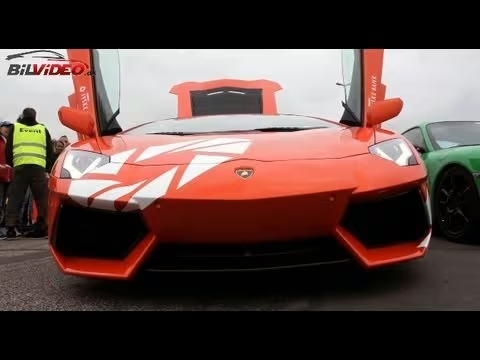
2. Scissor doors: The Countach introduced the iconic upward-opening doors that have since become a Lamborghini trademark.
3. Massive air intakes: Cooling the powerful V12 engine required extensive ventilation.
The Countach was produced in various versions over 16 years, with ever wilder spoilers and fenders. The final iteration, the 25th Anniversary Edition from 1988, delivered 455 hp and could reach a top speed of over 300 km/h.
Diablo: the dream car of the 90s
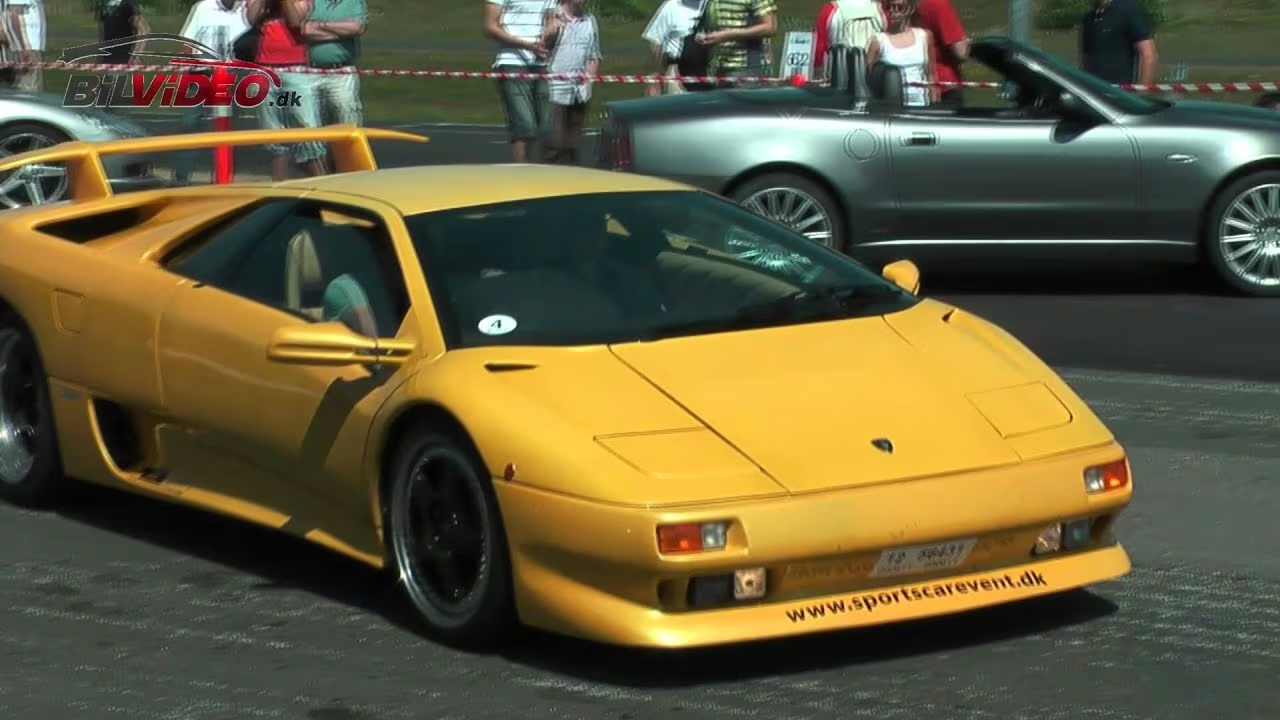
In 1990, the Diablo succeeded the aging Countach. Named after a particularly fearsome bull (like many Lamborghini models), the Diablo was the first Lamborghini to exceed 320 km/h.
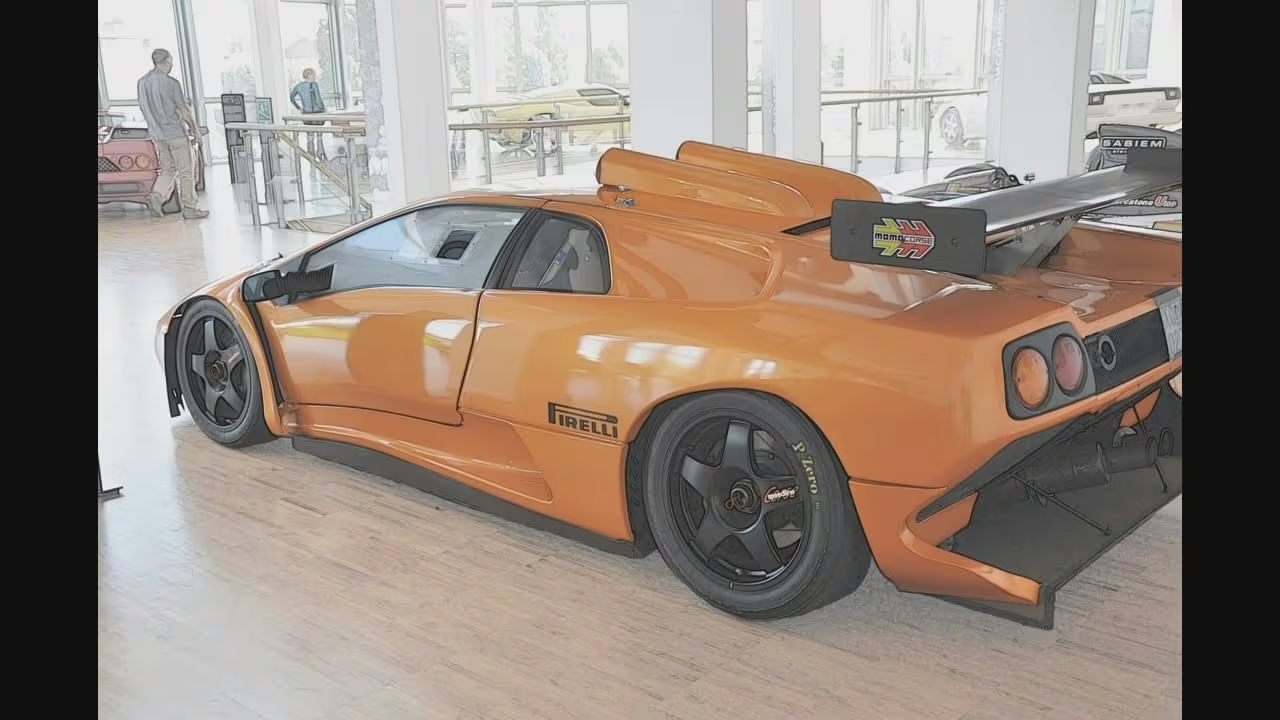
The Diablo kept many of the Countach's design elements, but with a more streamlined, modern look. Over its 11 year production run, the Diablo was continuously upgraded, culminating in the four-wheel drive Diablo VT and the extreme GT version.
Murciélago and Gallardo: a new era under Audi
In 1998, Lamborghini was acquired by Audi, part of the Volkswagen group. This marked the start of a new era for the brand, with an increased focus on quality and reliability, without compromising on the wild performance and extreme design.
The Murciélago, launched in 2001, was the first Lamborghini developed under Audi's ownership. It kept the V12 engine and four-wheel drive from the late Diablo models, but with an entirely new chassis and bodywork. The Murciélago was produced in various versions, including the open Roadster and the extreme LP 670-4 SuperVeloce.
In 2003, Lamborghini introduced the Gallardo, a smaller, more affordable model with a V10 engine. The Gallardo became Lamborghini's best-selling model ever and helped significantly boost the brand's sales.
Aventador and Huracán: modern Lamborghini icons
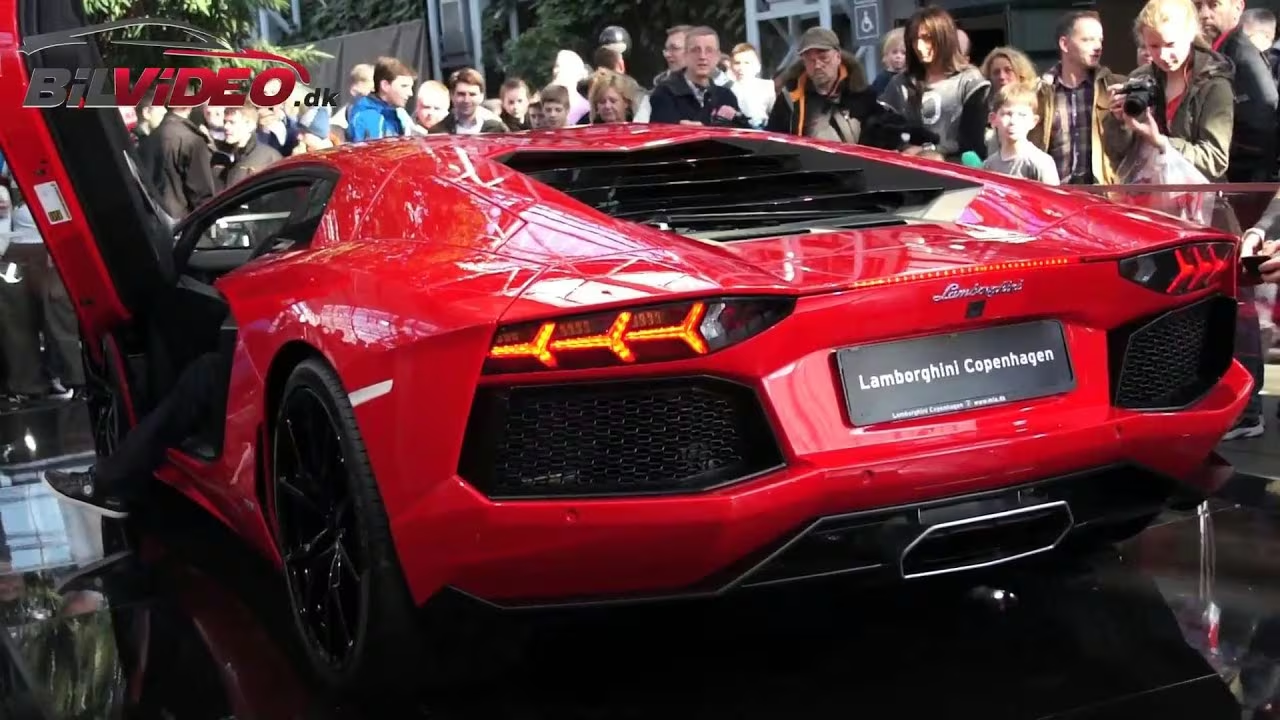
The Aventador, launched in 2011, replaced the Murciélago as Lamborghini's flagship model. With an entirely new carbon fibre monocoque chassis and a 6.5 litre V12 engine delivering 700 hp in the base model, the Aventador represents the pinnacle of Lamborghini's engineering.
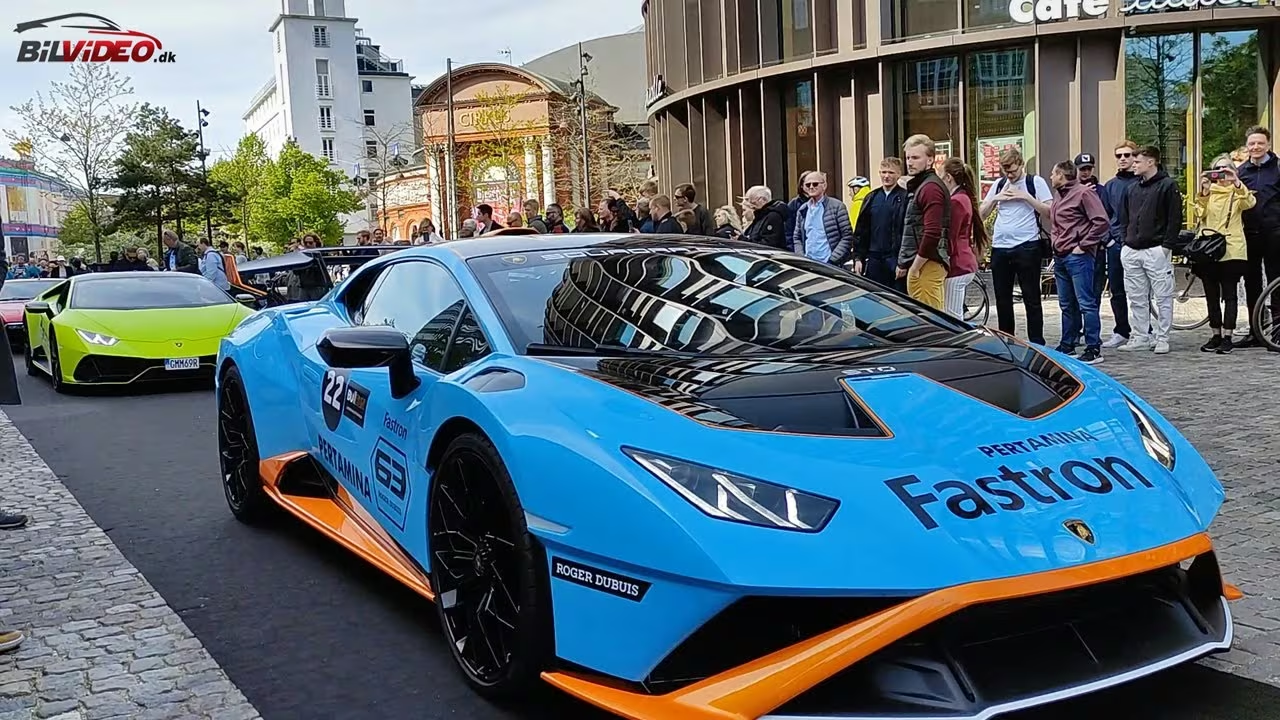
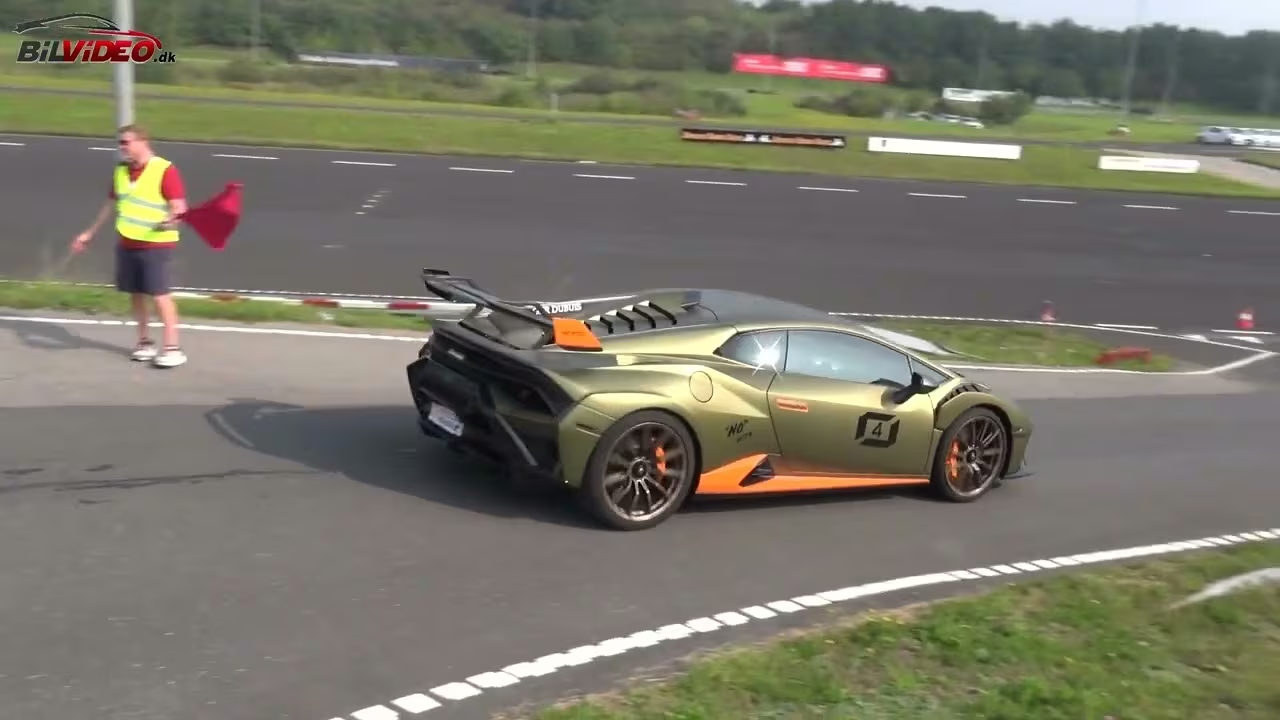
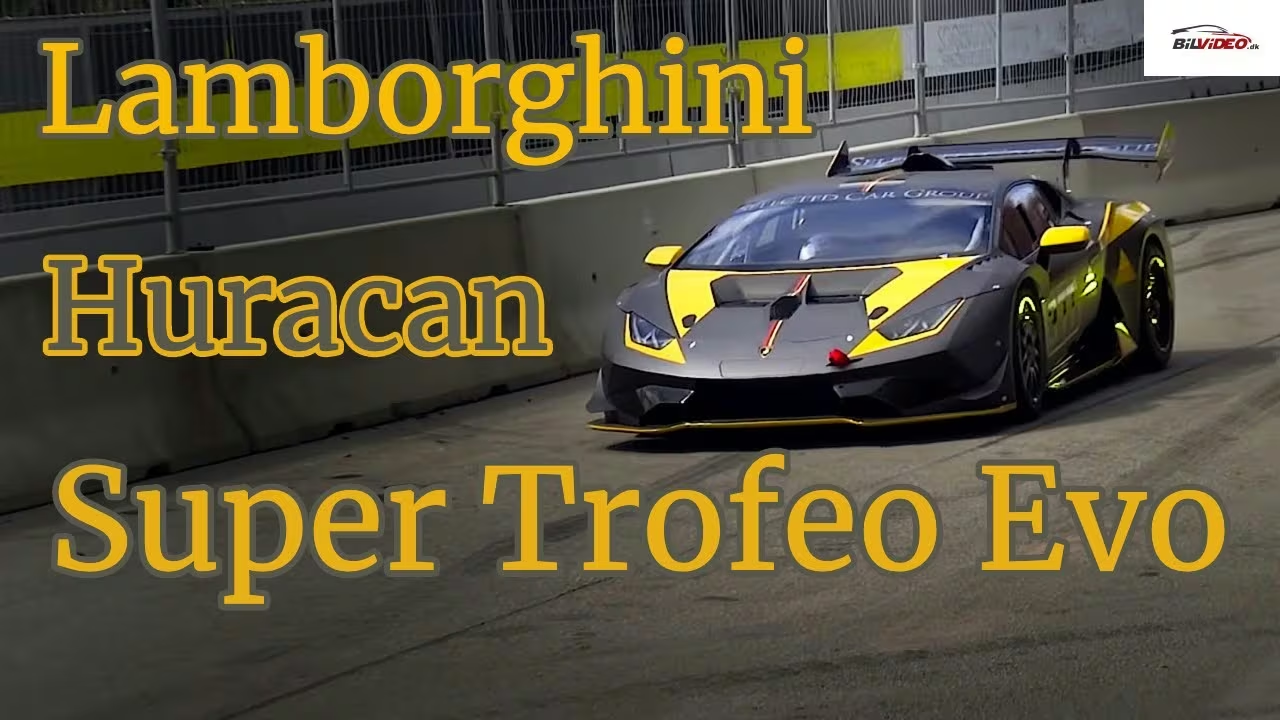
The Huracán, which replaced the Gallardo in 2014, brought Lamborghini into a new era of high-performance V10-powered supercars. With its sharp, angular design and advanced aerodynamics, the Huracán is a worthy heir to the Gallardo's throne.
Urus: Lamborghini reinvents the SUV
In 2018, Lamborghini shocked the car industry again with the introduction of the Urus, a high-performance SUV combining Lamborghini's supercar DNA with the practicality of a four-door, four-wheel drive car.
The Urus, named after a wild aurochs, is fitted with a 4.0 litre twin-turbo V8 engine delivering 650 hp. It can accelerate from 0-100 km/h in 3.6 seconds and reach a top speed of 305 km/h, making it one of the fastest SUVs in the world.
The models at a glance
| Model | Year | Note |
|---|---|---|
| 350 GT | 1963 | The first Lamborghini, 3.5 litre V12 with 320 hp |
| Miura | 1966 | Transverse mid mounted 4.0 litre V12 with up to 380 hp |
| Countach | 1974 | Wedge shape and scissor doors, 455 hp in the 25th Anniversary Edition |
| Diablo | 1990 | First Lamborghini able to exceed 320 km/h |
| Murciélago | 2001 | First model developed under Audi ownership |
| Gallardo | 2003 | V10 and the most produced Lamborghini ever |
| Aventador | 2011 | Carbon fibre monocoque and 6.5 litre V12 with 700 hp |
| Huracán | 2014 | V10 powered successor to the Gallardo |
| Urus | 2018 | SUV with a 4.0 litre twin turbo V8 and 650 hp |
Innovations and technology
Over the years, Lamborghini has been at the forefront of technological innovation. Some of their most notable contributions to the car industry include:
1. Mid-engine layout: Pioneered with the Miura and now standard for most supercars.
2. Extensive use of carbon fibre: From the Sesto Elemento concept car to the Aventador's monocoque.
3. Active aerodynamics: The Aventador and Huracán use active aerodynamic elements to optimise downforce and drag.
4. Hybrid technology: The Sián FKP 37, Lamborghini's first hybrid, uses supercapacitors instead of traditional batteries.
Lamborghini today: towards an electrified future
Today, like the rest of the car industry, Lamborghini faces the challenge of electrification. But in true Lamborghini style, they've taken on the challenge with enthusiasm and innovation.
Lamborghini has announced their "Direzione Cor Tauri" plan, aiming to cut CO2 emissions by 50% by 2025. This involves:
1. Hybridising the entire model line by the end of 2024.
2. Launching their first fully electric model in the second half of this decade.
But Lamborghini doesn't forget its roots. They continue to develop and improve their combustion engine models, particularly the V12 engine, which will continue to play a role in their most exclusive models.
The legacy lives on
From Ferruccio Lamborghini's defiance to today's high-tech supercars and SUVs, Lamborghini has always strived to be at the cutting edge of design and performance. Every step along the way has been driven by the founder's original vision: to create the ultimate sports cars.
Today, Lamborghini is more than just a car brand. It's a symbol of Italian style, engineering and a relentless pursuit of the extreme. Every Lamborghini isn't just a means of transport, but a rolling work of art that brings dreams to life on the road.
When you see a Lamborghini rush by, you're not just looking at a car. You're seeing the culmination of nearly 60 years of passion, innovation and a dedication to creating the most extreme and emotional driving machines. You're seeing the legacy of a tractor manufacturer who dreamed of building the perfect grand tourer, and ended up revolutionising the entire supercar concept.
So next time you hear the distinctive roar of a Lamborghini V12 engine or see the sharp, angular lines cutting through traffic, remember: you're witnessing a piece of living car history. A history that began with one man's defiance, and continues to inspire and astonish car enthusiasts all over the world.
Lamborghini isn't just a car manufacturer. It's a legend on four wheels that continues to define what a supercar can and should be. And we can hardly wait to see what the next 60 years will bring for this iconic Italian bull.
Watch more Lamborghini videos here: