
How a turbo works
5 Aug 2026
A turbo is one of the cleverest things in a car engine. It takes something the engine would otherwise throw away and uses it to make the car faster. Here is how.
Two wheels on one shaft
Every time an engine burns petrol, it pushes hot exhaust gas out. On a car without a turbo, that gas simply leaves through the pipe. The heat and the pressure are lost.
A turbo catches that gas. It routes the exhaust past a small paddle wheel, a turbine, and the gas makes the wheel spin. On the other end of the shaft sits a second wheel, a compressor. Because both wheels share the same shaft, they spin together.
The compressor draws in fresh air from outside and forces it into the engine under pressure.
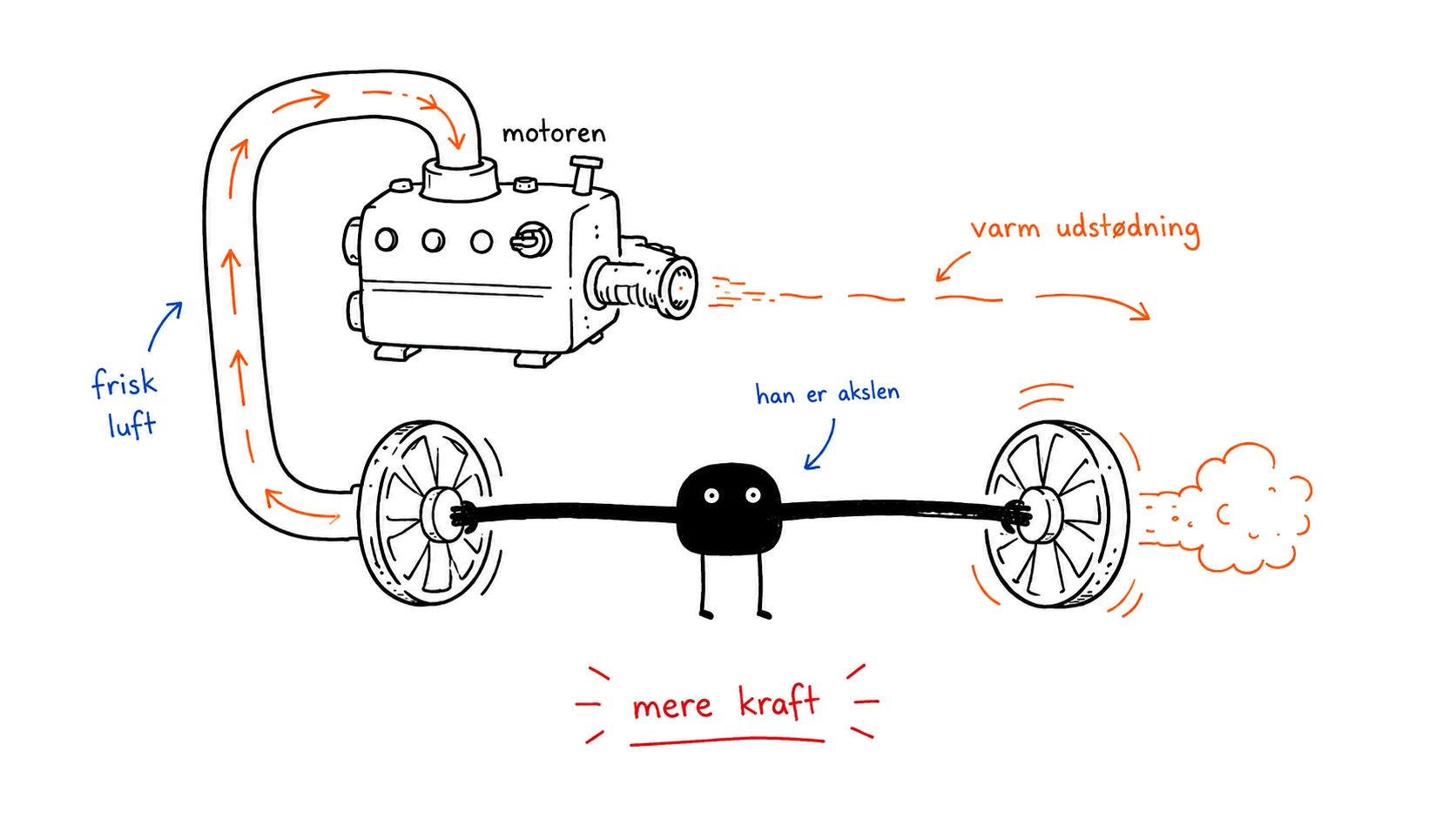
Why more air means more horsepower
An engine makes power by burning petrol. But petrol cannot burn without oxygen, and the oxygen comes from the air. The more air there is in the cylinder, the more petrol can be burned, and the harder the combustion pushes the piston.
A turbo forces in more air than the engine could draw on its own. That is why a small engine with a turbo can match a large engine without one. This is the whole point. A 2.0 litre turbo engine can easily make more horsepower than a 3.0 litre without.
Turbo lag
The turbo is driven by exhaust, and exhaust only arrives once the engine is already working. Floor the throttle from low speed and there is a moment before there is enough gas to spin the turbine up. That pause is called turbo lag.
In the first turbo cars it was obvious. The car felt lazy, and then the power arrived all at once. Modern turbos are smaller and lighter, and many cars use two turbos of different sizes, where the small one spins up quickly and the large one takes over. Some makers use an electric motor to spin the turbo before there is any exhaust at all. That is why you barely feel turbo lag in a new car.
The turbo in numbers
| What | Value |
|---|---|
| Turbine speed | up to roughly 200,000 rpm |
| Exhaust gas temperature | up to roughly 1,000 degrees |
| First turbo in an ordinary production car | 1962, Oldsmobile Jetfire |
| Broke through in Europe | late 1970s |
| Number of turbos on a Bugatti Chiron | four |
Intercooler and wastegate
Two more parts almost always come with a turbo.
When air is compressed it gets hot, and hot air takes up more room than cold air. That works against the whole idea. So the air is sent through an intercooler, a kind of radiator that cools it down again before it enters the engine. Cold air is denser, and denser air holds more oxygen.
A wastegate is a valve that lets some of the exhaust bypass the turbine. Without it the turbo would keep pushing harder the faster the engine ran, and eventually the engine would break. The wastegate holds the pressure where it belongs.
Turbo or supercharger
A supercharger does the same job as a turbo: it forces in more air. The difference is what drives it. A supercharger is turned by a belt from the engine itself. It responds instantly and has no lag, but it steals power from the engine in order to run.
A turbo is driven by the exhaust, by something that was on its way out anyway. That makes it more efficient, and it is why almost every new forced-induction car uses a turbo rather than a supercharger.
Where you can watch them work
Many of the cars on Bilvideo.dk are turbocharged. The Bugatti Chiron has four turbos on its W16. The Ferrari F80 has two on a V6, plus three electric motors. And a large share of the BMW range has used turbos since the 1970s.