
Maglev: are levitating cars the next step?
Updated 23 Jun 2025
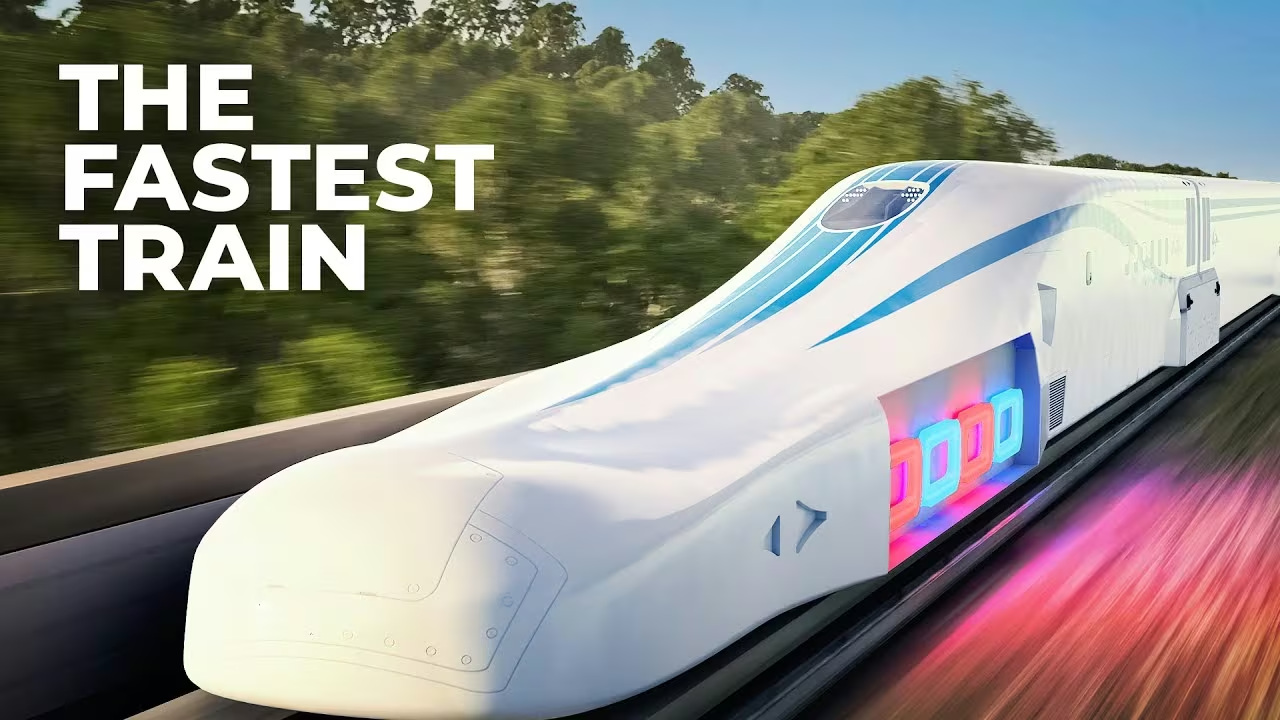
Imagine a world where cars float above the road, gliding effortlessly without wheels grinding against the tarmac, and driving with unprecedented efficiency. This might sound like a distant future, but the technology that could make it possible is already under development. In 2024, major advances have been made in maglev technology (magnetic levitation), and researchers and engineers are working tirelessly to integrate this technology into the car industry. In this article we'll explore how maglev technology could change the way we think about transport, both in the near and distant future.
The world in 2024: the state of maglev technology
Today, maglev technology is already used in trains, such as the well known maglev trains in Japan and China, which can reach speeds of over 600 km/h. This technology works by using magnetic fields to lift and propel the vehicle forward, eliminating friction and enabling faster, more energy efficient travel. But the potential of maglev technology doesn't stop at trains. Researchers at the Okinawa Institute of Science and Technology (OIST) have developed a new material that could revolutionise maglev technology by making it possible to use in cars without external power sources. This could mean a future where cars float on a magnetic cushion, drastically reducing wear and maintenance costs.
Maglev at a glance
| Topic | Status |
|---|---|
| Maglev trains | In service in Japan and China at speeds of over 600 km/h |
| New material | OIST has developed a material that can be used in cars without external power sources |
| Maglev cars | Prototypes in Japan that float briefly above the road |
| Biggest barrier | The cost of the infrastructure |
How does maglev technology work?
To understand the potential of maglev cars, it's important to know how the technology works. Maglev stands for "magnetic levitation", which means using magnetic fields to lift and propel a vehicle. This typically happens by having magnetic coils built into the roadway and into the vehicle itself. When current passes through the coils, a magnetic field is created that lifts the vehicle off the surface and pushes it forward. This technology has several advantages:
- Less friction: Since the vehicle doesn't touch the ground, friction is reduced, increasing efficiency and lowering energy consumption.
- Less maintenance: Without physical contact with the road, parts like tyres and brakes don't wear in the same way, reducing maintenance costs.
- Higher speeds: Less friction and aerodynamic design mean vehicles can reach higher speeds.
- Environmentally friendly: With the right energy source, maglev cars can be far more environmentally friendly than traditional cars.
The near future: maglev in the car industry
Japan is already well underway in exploring how maglev technology can be used in cars. Imagine a car that uses magnetic levitation to travel above the road without ever touching it. This could drastically improve fuel economy and reduce cars' environmental impact.
Japanese initiatives
Japan has long been a pioneer in transport technology, and maglev technology is no exception. There are already prototypes of cars that use magnetic levitation to float briefly above the road. These prototypes focus on reducing energy consumption and minimising maintenance by eliminating contact with the roadway. The Japanese government and car manufacturers are working together to make this technology a reality on the roads. They see great potential in applying maglev technology in urban areas, where traffic congestion and pollution are major problems.
Benefits of maglev cars
The benefits of maglev technology in cars go beyond simply saving energy. Maglev cars could reduce driver fatigue, since they drive smoothly without vibrations from uneven road surfaces. They could also help improve traffic safety by using precise, magnetic steering systems that minimise the risk of human error.
Challenges and solutions
Although maglev technology is promising, there are several challenges that must be overcome before we see maglev cars on the roads.
Costs
The biggest challenge is the cost of implementing maglev systems. Infrastructure for maglev vehicles is expensive, and it can be a challenge to make the economics work, especially in rural areas with lower population density. To overcome this challenge, researchers and engineers are working on developing cheaper, more efficient materials and systems that could make maglev technology more accessible.
Scalability
Another challenge is scalability. It's necessary to develop systems that can handle the enormous amounts of energy required to power a maglev road network. Here it's important to look at sustainable energy sources, such as solar and wind power, that can supply the necessary electricity without putting further strain on the environment.
Integration with existing infrastructure
Integration with existing road networks and transport infrastructure is also a significant challenge. Ways must be found to integrate maglev technology with current roads and bridge structures, which could require extensive rebuilding and upgrades.
Looking ahead: what can we expect?
In the longer term, maglev technology could revolutionise the car industry and change the way we think about transport. With the development of cheaper materials and more efficient systems, we can expect maglev cars to become more common.
Possible future applications
In the future, we can imagine a world where cars are no longer limited to roads. With maglev technology, cars could drive on dedicated magnetic tracks or even float briefly above urban areas to avoid traffic jams. It could also open the door to entirely new forms of transport, such as personal aircraft that could operate using the same maglev technology.
Interplay with autonomous driving
The combination of maglev technology and autonomous driving could further improve the transport sector. Self-driving maglev cars could offer a safer, more efficient and more comfortable travel experience. They could also reduce traffic congestion by optimising routes and speeds based on real-time data.
Conclusion
Maglev technology represents an exciting possibility for the future of transport. Although there are challenges to overcome, the benefits are potentially enormous. From increased efficiency and reduced environmental impact to improved safety and comfort, maglev technology could change the way we travel. Today we're already seeing the beginnings of this technology in countries like Japan, where researchers and engineers are working to integrate maglev technology into the car industry. As the technology develops, we can expect maglev cars to become an important part of our transport infrastructure, contributing to a more sustainable and efficient future. For more information on the latest advances in maglev technology, you can read the articles from OIST and Ecoticias. If you're interested in the world of cars and want to stay updated on the latest technological advances, gorgeous cars and more, you can also read more at bilvideo.dk, where we continually cover every aspect of the car industry, from innovations to practical tips and news.